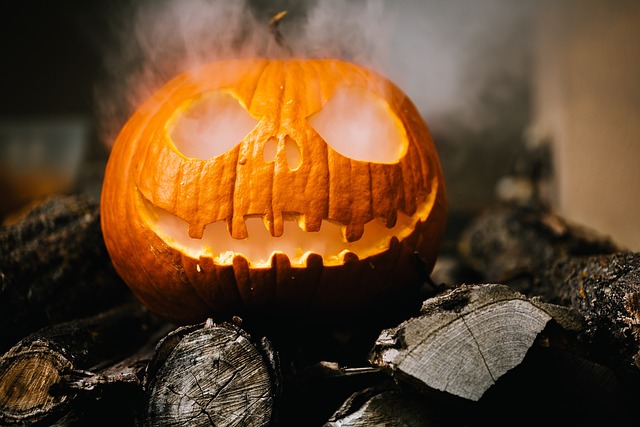
Jack o Lanterns are an ancient human tradition, one of the few cultural aspects shared amongst Vuzodep, Ferellan Giants, and humans alike. These lanterns are carved from hollowed-out gourds or root vegetables to resemble humanoid faces. Ferellan giants will often hire humans and smaller races to carve the lanterns for them since it is difficult to find large enough gourds and roots for them to carve. Their fingers are simply too big.
Unlike a standard lantern, these pieces are more like artwork, filled with eerie magical light or the simple flicker of a candle. The glow of light makes them functional lanterns, but the purpose of the device is to scare away evil spirits. Legend says that evil spirits roam Ferellan on one night each year, and can only be driven away by the light of the lantern. It is possible that the evil spirits they fear are what drove humans and Vuzodep to leave their homeland long ago.
Giants exist in many legends across the world, from ancient Eurth legends of one called “Goliath” to stories about legendary frost and storm giants in the wilds of Ferella. As of today, we have no definitive proof of the existence of any nonstandard giants such as these, but the legends are so prevalent that it is wholly reasonable to assume that they exist. The various subtypes could be explained as descendants of a common ancestor or perhaps as simple differences in appearance due to the climate they evolved in. We will explore each of these two giant phenotypes in this article.
On Ferella, the only type of giant known to exist in all climates, and the only one that commonly interacts with other races, is the common Ferellan giant. This giant looks like a normal humanoid, but is approximately ten times the size of most Ferellan races, namely elves and humans. Their skin can be any color in the pink and brown spectrum, including shades of olive. Hair color tends to be brown, blonde, black, or red. They never seem to have blue, green, or pink hair, though they occasionally have white hair. Culturally, common giants are very similar to humans, but with technologies to rival the dwarves. Their culture is also known to be sophisticated, even in remote areas.
It should be noted that these giants are significantly smaller than the one referenced in the legend of the Giant’s Hand.
Other types of giants are typically characterized by weather elements in their area, such as frost giants that are rumored to live in the frosty wastelands of the world. One notable exception is the legendary Goliath, a story common amongst Vuzodep. He is commonly described as being three or four times the size of a normal Vuzodep, similar to the size of weather-characterized giants. This has given rise to the theory that he was the allfather of all giant races, excepting the common giant. Another theory suggests that giants are all separate races with strength-based traits and weather resistances that allowed them to become apex predators in their areas.
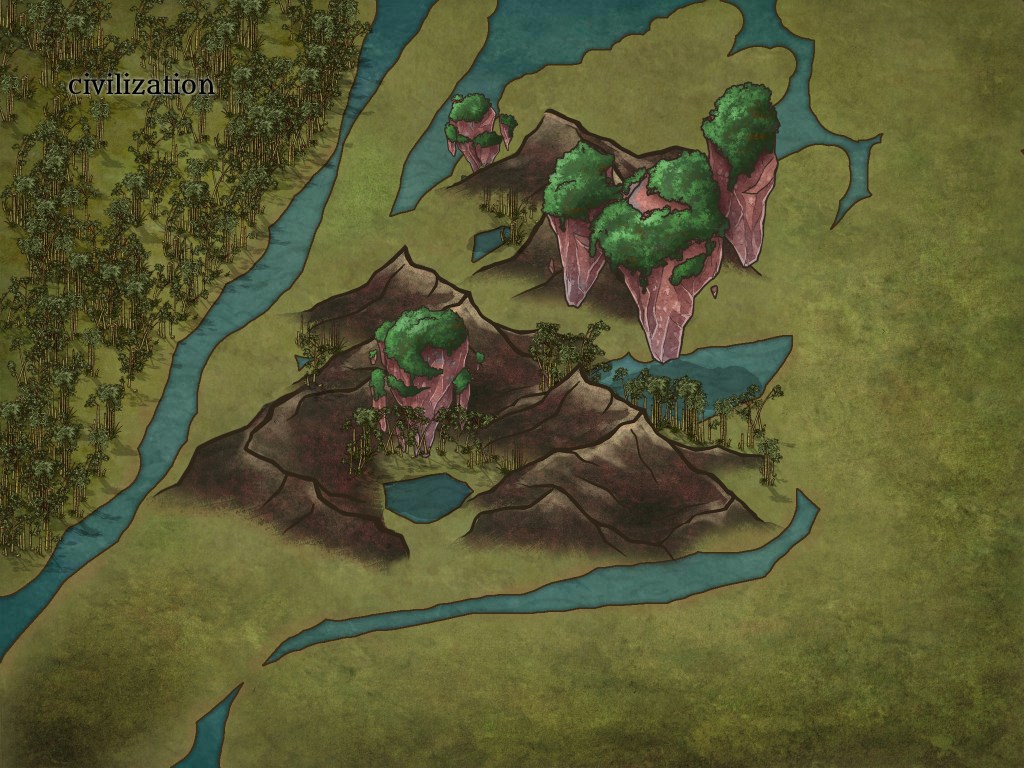
The Giant’s Hand is a rock formation consisting of a large island-like structure in the middle of a former lake, as well as several floating rocks above small ponds in its interior. It is some distance from civilization, and is the only documented area with floating rock formations.
Local legends say a great giant or god fell here. He wrenched his hand free, pulling the earth up and forming mountains. Floating rocks were formed when some of the mountains were pulled up so far that they came free of the ground. The space beneath them was then filled in by water over the years of rainfall.
There is no evidence that gods are real or visited this site, thus necessitating a scientific explanation. Floating rocks have been theorized as the result of magnetic repulsion, detailed here. The formation itself happens to look like a large handprint, but was most likely just a mountainous formation that happened to occur in the midst of a prehistoric lake.
The existence of the lake and the odd way the water moves around the mountains suggests that there is a network of underground rivers beneath or around the mountains. While some claim this supports the theory that the range was formed by a god, it is more likely that earthquakes, wear from the water itself, and other stressors created underground rivers that change the way water moves around the mountains.
One theory, found in an ancient human textbook from long before humans had interacted with the other races, suggests that mountains are formed by internal stressors in the ground, possibly the same stressors that created the underground waterways. This theory says that the ground is formed in plates of rock that sometimes collide or slide against each other, forming mountains.
Most inhabitants of the Giant’s Hand live on the floating rocks. They are typically Vuzodep, and spread the legends and histories of the area verbally. Notably, their history does not mention ever residing in the country Vuzode, from which the Vuzodep people get their name. While ponds, rivers, and lakes provide ample fresh water, growing food can be a struggle as the locals must find ways to grow food atop their floating rocks or must travel to the surface to gather.
As in many fantastical stories, Ferella is home to floating rocks. While these may seem to be magical defiances of reality, it is entirely possible that these rare formations are natural. Only one formation, on the Giant’s Hand island, has been documented. While the mythos of its creation may suggest otherwise, it is unlikely that magic formed this phenomenon. Instead, many of our scientists theorize that magnetic forces may be forcing rocks away from the ground and suspending them. This theory comes from ancient texts that describe the planet Eurth’s rotation. Ancient humans believed that their home planet rotated, thus causing a magnetic pull of some sort. In some places, magnetic rocks could theoretically be repelled by such forces.
This is such a rare phenomena that further speculation would be as properly supported as theories about magic. Thus, we will refrain from further elaboration in this report. The rest of this report will instead focus on the cultural study of those who live near the floating rocks.
It is not uncommon for locals to make their homes atop rocks in the Giant’s Hand, and rumors circulate of buildings built on such rocks elsewhere. Those who choose these locations have cited a variety of reason, including but not limited to the lack of sovereignty over these rock chunks. Others believe that the magic that causes the rocks to float is beneficial to health, and more still claim that it assists them with their own studies or magical research.
Everyday life on these rocks presents a challenge for locals since the rocks do not support their own ecosystems. Instead, people living there must descend on a near-daily basis to collect water and hunt. Crops seem to sustain themselves there, particularly those common in mountain areas. Locals have had to travel far to transplant hardy species of crops, herbs, flowers, and trees from mountainous regions for cultivation on their rocks. For this reason, plant life is valued heavily. Sometimes ground-dwellers in the region will make special trips to visit the rocks and see the plants that are so different from the ones local to the area.
One family claims that their home became unlivable for a short while, and they commissioned a druid to save their ancestral home. The druid determined that the air had “fled” from the location, but was unable to do anything permanent to help the family. The druid referred them to a wizard from our facility, who then brought the region to our attention. With our permission, the wizard performed some experimental magic borrowed from our space travel experiments and used the spell to encase the rock in a magical bubble to keep the air in. She also recommended that the family grow trees within the bubble to help produce oxygen, and they planted their “Mother Tree” in the home’s living room. The tree and the family thrive at the time of this report.
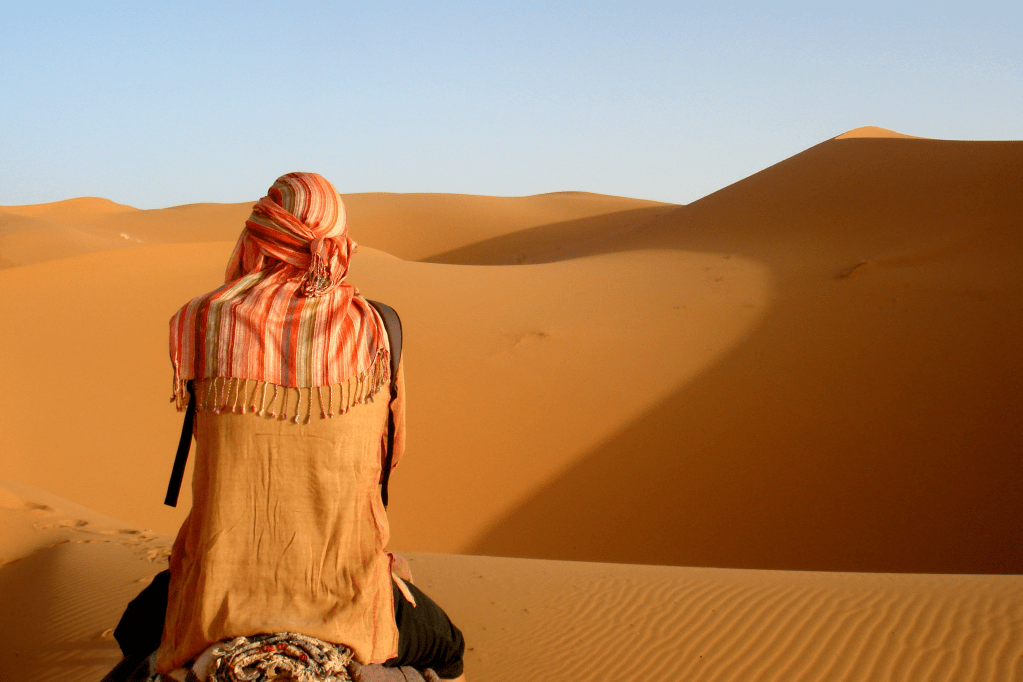
The Vuzodept are desert-roaming persons whose origins begin in a kingdom called Vuzode. The kingdom was believed to be inhabited by monstrous beings. Little is known about Vuzode except that they waged endless war on the kingdom of Luft, and eventually a group of Vuzodept joined the people of Luft to end the war.
Vuzodept do not resemble the monstrous beings cited in ancient texts, however; instead, they look like bandeargen with darker and rougher skin, likely due to their time spent in deserts. Often, Vuzodep children have similar hair coloring to the bandeargen, as well. This suggests that Vuzodept may be a long lost tribe of bandeargen who chose to live nomadically in the deserts. Alternatively, they could be reject bandearg children, or it could simply be common for them to interbreed with bandeargen. The latter seems unlikely, since few Vuzodept have been found in bandearg settlements.
Little is known of Vuzodep culture except for their presumed nomadic nature, as they are rarely seen outside of deserts and markets. Their settlements or even houses have not been found, but occasional campsites are stumbled upon. Some traveling Vuzodept have mentioned being a “third sibling” as if it bore cultural significance, but refused to elaborate. These persons were noted to have significant magical abilities, suggesting that families with more children tend to have greater magical abilities. This is merely a hypothesis based on scarce information.
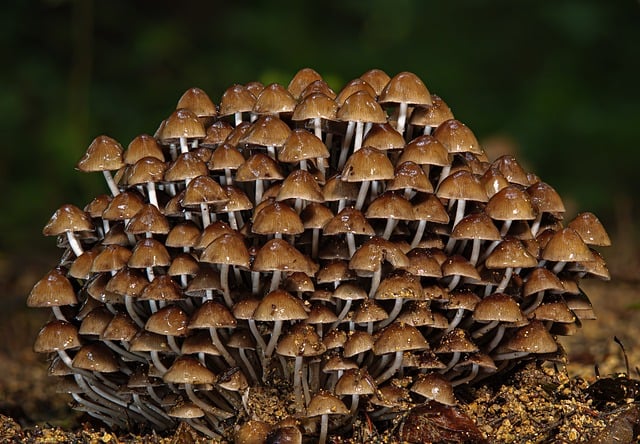
These mushrooms are known as Heikei mushrooms, and are found in the Pevyse forest. This forest seems to grow all plants to enormous sizes, with the great trees of the Pevyse settlement being the most well-known. These mushrooms are of similar stature, and grown in a unique formation, one atop the other. Gnomes of the Heikei forest live in these great formations, using them as homes in a manner similar to elves and Pevyse bandearg. Some hollow out the mushrooms while others use them as a tentlike shelter, building small huts beneath their caps. The mushrooms require thicker walls, thus providing smaller homes than an elven-built tree home made from a similar-sized tree.
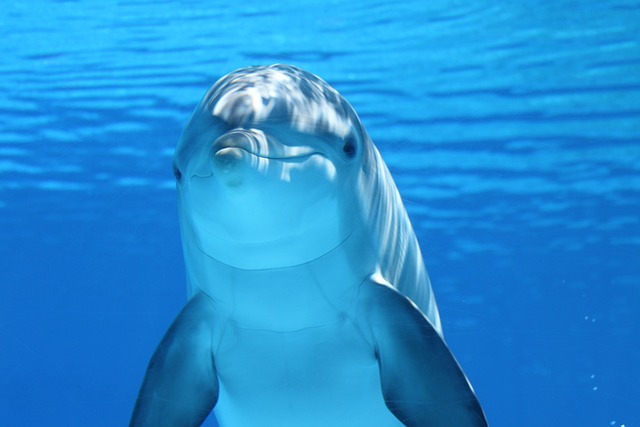
Dolphins are known to be quite intelligent, with IQs between that of a typical bandearg and that of a human. We have conducted extensive testing and found that while they are capable of speech, it is difficult to capture nuances. While speaking in the present tense and even future tense have been possible, they seem to struggle with the past tense, confusing it with the theoretical.
Attempts to ask them about their culture have been more successful than expected, though much of it is yet to be deciphered. Asking them about their past only results in legends and stories, perhaps due to their primitive language and oral culture. They are remarkably consistent, claiming that they originated from the sky. This likely refers to some deity that they believe their species came from. They claim they were with humans during this occurrence, perhaps indicating that their deity created humans, as well. It could also suggest that they imagine their deity as a humanoid, though their lack of respect for researchers suggest that no reverence for our species exists.
We have been able to determine a consistent starting point for the species: the island of Atlantis. Scientific research shows that it is a central cultural hub, and all dolphins interviewed had spent time there on multiple occasions.
This is one of the earliest images in our archive. It seems to be depicting a mountain range from above, as if from a bird’s view. This may be a fanciful image by the artist, though images from our own experimental flights show that it is remarkably accurate in terms of viewpoint and angle. It also seems to be framed by a shiny, artificial portal of some sort. This suggests that the vantage point may have been achieved by some sort of spell.
It is also possible that flight was achieved at an earlier time, and that the technology was somehow lost to time. This is consistent with some salvaged pieces made from a material that resembles the shiny white frame of the window.
One final thing of note; the image is not consistent with any known mountain range on ‘El’.
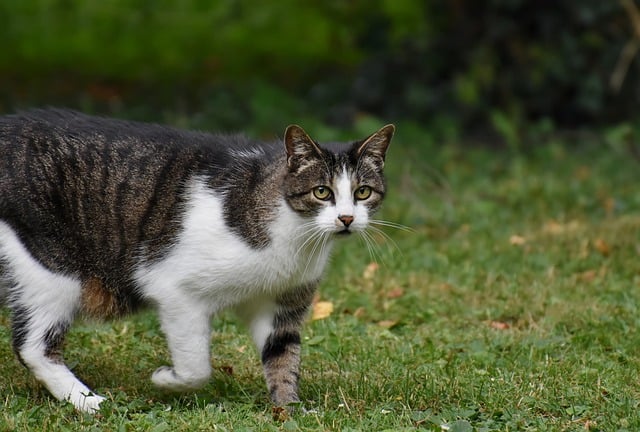
Domestic cats are a curiosity, as there is no evidence that their descendants ever lived in the wild. Some theorize that they were a construct of magic while others believe that they were a scientific experiment like the Pas Todoans. It is interesting to note that older entries refer to them as “domestic cats,” implying that a wild cat did in fact exist. This could simply mean that feral cats were common at that time, rather than true “wild” cats. It could also be an indicator that Ferellan wildcats ceased to exist long ago.
It is important to note that while there are felines in the Ferellan wilds, they are not in fact related genetically to domestic cats. This, along with their physical similarities, would support the theory that they were genetically altered so that their DNA no longer resembles that of wild cats on Ferella.
Sailors have a strange theory, a myth that seems to be popular across all the seas of ‘El’. They believe that cats came from somewhere else, having become domesticated in a distant land where wild cats may still roam. This likely came from the fact that cats often travel on ships, visiting all the lands of ‘El’ that way. Sailors may have assumed that they did the same, though there is no reason to believe that another land might have existed before this one.





 Moontouched Dragon